September 13, 2017
Seasonal Pet Allergies Flare in the Fall & Spring
- 28 comments
- General Health, General Pet Info
- written by: Pruess Coulter Carleen
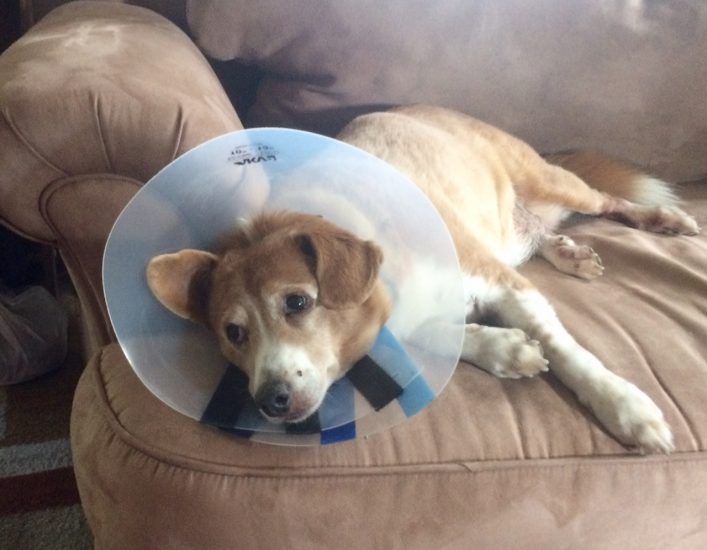
I took Soldier to see the veterinarian earlier this week because, right on cue, his seasonal pet allergies have flared up. Every spring and fall like clockwork, he begins obsessively scratching himself and rubbing his ears on the carpeting. It takes just a day or two for the angry, red rash to appear on his belly and groin area. Within that same amount of time, Soldier usually starts chewing his feet, often until they are raw and bloodied. This morning his back left foot was a mass of raw skin and his belly was speckled with what looked like heat rash. So I called the vet and they got him in. On the drive to the animal hospital, I noticed another unpleasant sign of Soldier’s seasonal allergies – he was beginning to stink. When his skin is inflamed, it begins to have a weird, greasy odor. Yea, I know. Ick.
Using a Prescription Drug for Seasonal Pet Allergies
Fortunately, Soldier’s allergies were diagnosed several years ago and most years he doesn’t have a problem because he is treated seasonally (spring and fall) when his symptoms flair up. I know that the use of Apoquel (r) for pets is controversial, but I can only base my decisions on my experiences. I had tried many natural remedies over the years and never got his atopic dermatitis under control. Apoquel, on the other hand, quickly gets rid of the itching, the rash and the weird odor. Soldier has never had a side effect from this medication and his relief is palpable when he stops scratching and his skin can heal. To hasten the healing of his hot spots, we also apply a topical steroid cream, which reduces the inflammation and reduces the itching.
Signs of Seasonal Skin Allergies in Pets
There are a variety of allergy symptoms that dogs can develop, including upper respiratory responses such as sneezing and watery eyes. Soldier has skin allergies rather than respiratory allergies. Some of the signs of seasonal skin allergies include:
- Excessive scratching, especially if your dog scratches more after being outside (pollen is often the culprit)
- Red, irritated skin that may be inflamed – check areas like the belly and between the toes
- Hot spots – red, raw patches where your dog has chewed away the fur and irritated the rash so that it won’t heal
- Excessive licking or chewing, especially of his belly or feet
- Repeatedly rubbing his face against the carpet or other surfaces to try to scratch the itch
- A greasy feel to the fur and skin in the areas where a rash has spread over the skin
- An odd odor that may indicate a secondary infection as a result of the allergies. This often shows up in the ears of an affected pet.
Other Treatments for Seasonal Pet Allergies
If your dog has any of the symptoms listed above, a trip to your veterinarian is in order. The vet may want to perform allergy tests to see what your dog is allergic to. If it’s something environmental that can be eliminated or reduced in your dog’s environment, you may be able to get rid of the allergens and the allergy. There are also a multitude of healthy, holistic treatments that can work on seasonal pet allergies, but I’ll discuss those at a later date. If your dog’s allergies are too general (he’s allergic to tree pollens, for example) to treat in a preventative sense, an allergy medication like Apoquel (r) may be a good choice for you and your dog.
Preventing Skin Infections from Seasonal Allergies
Regardless of whether your dog’s seasonal allergies are treated holistically, with OTC medications or with prescription anti-allergens, the important thing is to keep him comfortable and prevent secondary skin infections. Periodic oatmeal baths are very soothing to the skin, as are any number of anti-itch shampoos and salves designed specifically to calm the irritation. Be careful when you apply these, however; if your dog chews at those areas a lot, you’ll need to outfit him with a “cone of shame” or have him wear a shirt to cover areas he might chew on. You don’t want him to ingest too much of the topical treatment. In most cases, seasonal pet allergies only last a few weeks to two months at a time. During those times, however, you can greatly reduce your dog’s discomfort by beginning treatment immediately.
(BTW, that’s Soldier looking terribly sad in his cone of shame in the photo above. He’s staring at me with a forlorn, betrayed expression that says everything I need to know about his feelings regarding the cone. He doesn’t know that I hate having to put it on him almost as much as he hates wearing it.)
Leave a Reply
The Contemporary Pet Took the Pledge

FeedSpot Recognizes the Contemporary Pet!


28 Comments