May 28, 2017
How to Prevent Dog Bites, Part 2: Approaching a Dog Properly
- Comments
- General Pet Info, Training Your Pet
- written by: Pruess Coulter Carleen
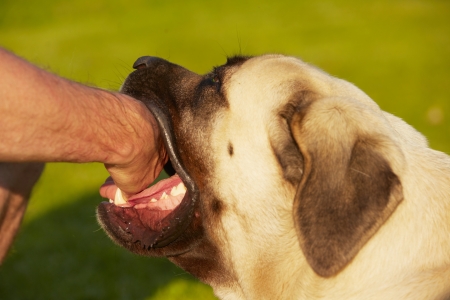
Responsible dog owners train their dogs properly to prevent dog bites, but you can’t always depend on the responsible behavior of a dog owner when you’re approached by or are approaching a dog. Even dogs you are familiar with can unexpectedly bite if they are startled, don’t feel well or aren’t in the mood to interact. To protect yourself from dog bites, it’s imperative to know how to interact with dogs properly and when to back away. Heeding a dog’s master when they warn you that the dog doesn’t like strangers or is skittish is the best way to avoid a dog bite. Likewise, you should never approach an animal who is in a car or confined space without an owner nearby. Their instinct will be to defend their ground. Leaning over a fence is also a bad idea.
Understanding Dog Body Language
Understanding the body language of a dog can help minimize the chance of a dog bite. There are clear signs that a dog is irritated, fearful or aggressive if you know what to look for. Common signs that a dog is feeling threatened and may bite include:
- Body tension (looking like he is tensed and ready to strike)
- Ears that are pulled back against the head
- A brow that is “furrowed”
- Staring intently at you with his head held low
- Backing away from you with a stiff tail
- Growling and/or baring his teeth
- Crouching in fear, with a lowered head and tail between the legs
- Repeatedly licking the lips and shaking
It is important that you do not turn your back on or run away from an aggressive dog. The dog’s predatory instinct will kick in and he may chase you. If you think a dog is going to attack you, stand still and avoid eye contact, which he could see as a challenge. Try not to scream or shout and keep your hands at your sides. Once the animal loses interest, you can slowly back away. If he doesn’t lose interest and does attack, let him have your coat, purse, backpack or anything else that he can bite instead of you. If you are knocked down or fall, curl up and remain motionless, putting your hands over your ears so that he can’t easily grab any part of your body. Stay in this position until he loses interest or someone comes to your aid.
How to Approach Pets to Prevent Dog Bites

Teaching your children how to properly interact with pets can prevent dog bites.
You’ve probably heard a pet parent say, “Oh, my dog is a sweetheart. He’d never bite anyone!” You may have heard this just prior to their dog biting someone! No pet parent wants to admit that their dog might bite, but when antagonized, ill or feeling trapped, any dog can turn on a person suddenly. The fact is, most dog bites are from a family pet or a pet known to the person who is bitten. Make sure you always keep these tips in mind and teach them to your children:
- Never attempt to befriend a strange dog or pet a familiar one without the owner’s permission.
- Before touching a dog, let him sniff your hand.
- Never pull on a dog’s ears, tail or touch their face.
- Don’t pet any dog on the top of the head; instead, pat his shoulders or back.
- Never try to pet or play with a dog who is eating, chewing on a toy or sleeping.
- Never approach a nursing dog; she may perceive you as a threat to her pups.
- Never touch a dog that is scared, barking or growling.
- Always report a dog that is loose in your neighborhood.
- When a dog leaves the room, do not follow him. Allow him to retreat and respect his space.
The best way to prevent dog bites is to educate both dog owners and anyone who interacts with dogs in the proper way to approach animals and interact with them in a non-aggressive, appropriate way.
In Part I of “How to Prevent Dog Bites,” we talk about how to prevent dog bites by understanding dogs’ body language and dog owners’ responsibility in preventing bites.
Properly socializing your dog at an early age will minimize the chances that he bites anyone. Linda Wagner’s article on puppy socialization can help.
The Contemporary Pet Took the Pledge

FeedSpot Recognizes the Contemporary Pet!


Leave a Reply