March 9, 2017
Are Pet Vaccines Necessary?
- Comments
- General Health
- written by: Carleen
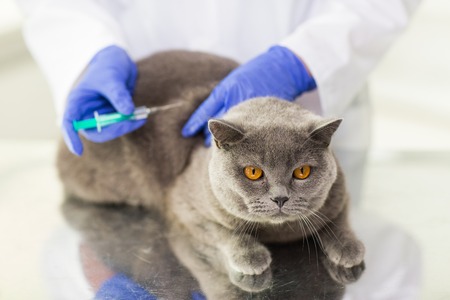
Childhood vaccines have been in the news for the past several years, but recently there has been increased interest in whether or not pet vaccines are necessary as well. A cat owner recently reached out to us to ask whether pet vaccines are necessary for her indoor cat.
“My cat is a house cat and never goes outside except for a few minutes to sit on the porch or in the yard. Do I really need to get her vaccinated? She’s never around other cats, so I’d rather not subject her to pet vaccines if they aren’t necessary,” says Barb in New Jersey.
The Link Between Pet Vaccines and Some Cancers
“That’s a tough question and one we are having issues with in our hospital. I’m not sure why you’re reluctant to get the vaccinations. Some people have issues with cost and some have issues with pet vaccines themselves. If the issue is cost, there are low-cost pet vaccine clinics to help. If the issue is medical, then that is a much tougher question. Many have issues with use of vaccines in their own children and those questions have extended into the veterinary field. Let’s ignore autism and the human discussions and look at dogs and cats. Primarily in the canine field, questions persist on the role pet vaccines play in the field of autoimmune diseases such as immune mediated hemolytic anemia, thrombocytopenia, and others. There are also questions regarding pet vaccine reactions, especially with the lepto virus vaccine. In the feline field, questions revolve around the role played by vaccines in the etiology or cause of soft tissue sarcomas. Fibrosarcomas and soft tissue sarcomas are malignant tumors, i.e., cancer. It was initially believed that rabies and feline leukemia (FeLv) vaccines caused cancer in 1 of 100,000 cats. Those numbers are now believed to be closer to 1 to 10 out of 10,000 cats. Additionally, we now understand that any vaccine, not just rabies and FeLv, can be responsible for causing cancer in those cats. It turns out that pet vaccine associated cancer is extremely difficult to treat. The primary method of treatment for these vaccine associated sarcomas is surgical excision of the entire tumor. This is expensive and recurrence is not unknown without following up with radiation therapy.”
Pet Vaccine Options
“So what are your options? In most locations there are laws requiring the rabies pet vaccines be kept current. There is testing available to check the titer status in dog and cats (people too!). However, not all jurisdictions will accept this as an alternative. Even with appropriate documentation of a valid titer status and a history of vaccine reactions, current vaccinations may still be required. As for other pet vaccines, there are no legal requirements and therefore if your cat is exclusively indoors, you may not need those vaccines. You should discuss this with your veterinarian.”
Why Some Businesses Require Pet Vaccines
“Though the state does not require a multitude of vaccines, many boarding kennels do require these for boarding. As a private facility, they have the right to require those pet vaccines before your pet is admitted for boarding in their kennel. It may be worth discussing options of using vaccine titers with the kennel owner. But, don’t be mad if they do not agree. They not only board your pet, but they also have many others in their kennel. The owner is only looking to protect all the pets from any possible contagious disease. Finally, please remember…. You should still see your veterinarian for an annual health exam even if vaccines are not being given.”
Read more about Dr. Kevin Winkler on our Contributors page.
The Contemporary Pet Took the Pledge

FeedSpot Recognizes the Contemporary Pet!


Leave a Reply